Neurosis: Pain of Mind 12"
“Pain Of Mind marks the inception of one of the weirdest and most powerful bands there ever was as they begin their odyssey through the sonic landscape: thirty-three years, thirteen albums and counting. These gritty punk songs bear little resemblance to what Neurosis would become, but the future was written here, and if you listen closely to these kids—barely out of high school at the time, you can hear their early influences: the guitars and existential anguish of Amebix and Rudimentary Peni, the passionate politics of Crass, the heaviness of Sabbath—and here, too, they lay the foundation for some of their enduring concerns: the pursuit of transcendence, and contemplation on the downward suck of despair.
“As Ian MacKaye coyly suggests in the East Bay Punk doc Turn It Around, there are ‘a lot of holes to fall into’ growing up in the Bay Area. In 1987 Dave Edwardson was 18, Scott Kelly was 19, Jason Roeder was 16, Chad Salter, the band elder, was 21, and they had already fallen into many of them, including, of course, the great abyss of depression. Only a teenager could write the punk anthems ‘Black,’ ‘Grey,’ ‘Life on Your Knees,’ and of course the title track, ‘Pain of Mind.’ They are songs of survival.
“With Pain of Mind, Neurosis sunk their claws into the hearts and minds of the East Bay scene like no one else. They were fucking dark, gazing right into the abyss and refusing to turn away. The cacophony of vocals on this album—Kelly’s unhinged screams, and Edwardson’s guttural growl, suggested a familiar sort of internal mania: like the voices in an unquiet mind, paranoid, but for all the right reasons. And Jason Story’s original cover art perfectly captures that torment.
“Neurosis shows in the Pain Of Mind-era were like nothing else. The pit was wild; people rolled around on the floor, climbed the walls, threw themselves off the stage. For a few days after a show, you always felt real mellow.
“Neurosis reminded us that maybe we weren’t free, but at least we were locked up together. It sounds melodramatic, but Neurosis might have saved our lives.”
— Anna Brown
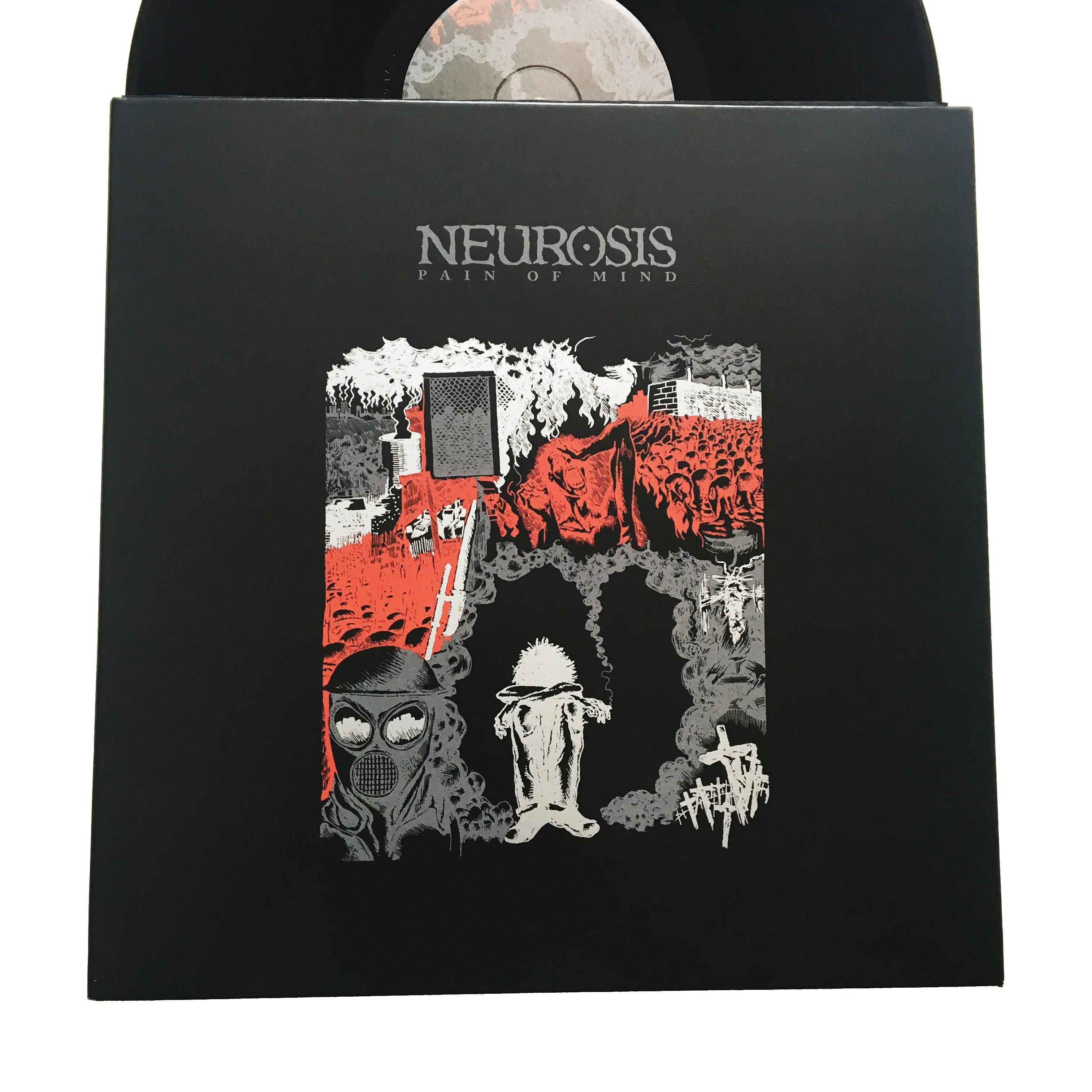
Our take: Reissue of Neurosis’s first album from 1987. This one abandons the updated artwork featured on the Alternative Tentacles reissue from 1984 (which I never liked) and updates the original release’s cover illustration to fit Neurosis’s present aesthetic. I’ll leave it up to you to decide whether that was a wise choice, but I suppose it could have been worse. Many people only know Neurosis as the progressive metal band they’ve become, but this early stuff differs greatly from that. While it’s still metallic, it’s 100% a hardcore record. I’d put it in a similar category to what bands like Born Against, Nausea, and Rorschach were doing around the same time. These bands were rooted in the 80s hardcore aesthetic, but felt constrained by its limitations and were seduced, to a greater or lesser extent, by the artistic possibilities of metal. What emerges is a sound that’s very different from crossover—which prioritized the speed and heaviness that were metal and hardcore’s common language—and more like a prog-ified version of 80s hardcore. Imagine if King Crimson had grown up going to shows at the Vats and listening to records by Verbal Abuse and Agnostic Front and you’re in the ballpark. This was a real moment in time, and I'm not sure if there are still bands making music like this. This album is a classic of the era, bursting with ideas and innovations. Unless you’re one of those dullards who think hardcore died by the mid-80s this is an essential, classic album and I’m glad to see it’s back in print.
Product Information
Product Information
Shipping & Returns
Shipping & Returns
Neurosis: Pain of Mind 12"
Neurosis: Pain of Mind 12"
“Pain Of Mind marks the inception of one of the weirdest and most powerful bands there ever was as they begin their odyssey through the sonic landscape: thirty-three years, thirteen albums and counting. These gritty punk songs bear little resemblance to what Neurosis would become, but the future was written here, and if you listen closely to these kids—barely out of high school at the time, you can hear their early influences: the guitars and existential anguish of Amebix and Rudimentary Peni, the passionate politics of Crass, the heaviness of Sabbath—and here, too, they lay the foundation for some of their enduring concerns: the pursuit of transcendence, and contemplation on the downward suck of despair.
“As Ian MacKaye coyly suggests in the East Bay Punk doc Turn It Around, there are ‘a lot of holes to fall into’ growing up in the Bay Area. In 1987 Dave Edwardson was 18, Scott Kelly was 19, Jason Roeder was 16, Chad Salter, the band elder, was 21, and they had already fallen into many of them, including, of course, the great abyss of depression. Only a teenager could write the punk anthems ‘Black,’ ‘Grey,’ ‘Life on Your Knees,’ and of course the title track, ‘Pain of Mind.’ They are songs of survival.
“With Pain of Mind, Neurosis sunk their claws into the hearts and minds of the East Bay scene like no one else. They were fucking dark, gazing right into the abyss and refusing to turn away. The cacophony of vocals on this album—Kelly’s unhinged screams, and Edwardson’s guttural growl, suggested a familiar sort of internal mania: like the voices in an unquiet mind, paranoid, but for all the right reasons. And Jason Story’s original cover art perfectly captures that torment.
“Neurosis shows in the Pain Of Mind-era were like nothing else. The pit was wild; people rolled around on the floor, climbed the walls, threw themselves off the stage. For a few days after a show, you always felt real mellow.
“Neurosis reminded us that maybe we weren’t free, but at least we were locked up together. It sounds melodramatic, but Neurosis might have saved our lives.”
— Anna Brown
Our take: Reissue of Neurosis’s first album from 1987. This one abandons the updated artwork featured on the Alternative Tentacles reissue from 1984 (which I never liked) and updates the original release’s cover illustration to fit Neurosis’s present aesthetic. I’ll leave it up to you to decide whether that was a wise choice, but I suppose it could have been worse. Many people only know Neurosis as the progressive metal band they’ve become, but this early stuff differs greatly from that. While it’s still metallic, it’s 100% a hardcore record. I’d put it in a similar category to what bands like Born Against, Nausea, and Rorschach were doing around the same time. These bands were rooted in the 80s hardcore aesthetic, but felt constrained by its limitations and were seduced, to a greater or lesser extent, by the artistic possibilities of metal. What emerges is a sound that’s very different from crossover—which prioritized the speed and heaviness that were metal and hardcore’s common language—and more like a prog-ified version of 80s hardcore. Imagine if King Crimson had grown up going to shows at the Vats and listening to records by Verbal Abuse and Agnostic Front and you’re in the ballpark. This was a real moment in time, and I'm not sure if there are still bands making music like this. This album is a classic of the era, bursting with ideas and innovations. Unless you’re one of those dullards who think hardcore died by the mid-80s this is an essential, classic album and I’m glad to see it’s back in print.
Product Information
Product Information
Shipping & Returns
Shipping & Returns
Description
“Pain Of Mind marks the inception of one of the weirdest and most powerful bands there ever was as they begin their odyssey through the sonic landscape: thirty-three years, thirteen albums and counting. These gritty punk songs bear little resemblance to what Neurosis would become, but the future was written here, and if you listen closely to these kids—barely out of high school at the time, you can hear their early influences: the guitars and existential anguish of Amebix and Rudimentary Peni, the passionate politics of Crass, the heaviness of Sabbath—and here, too, they lay the foundation for some of their enduring concerns: the pursuit of transcendence, and contemplation on the downward suck of despair.
“As Ian MacKaye coyly suggests in the East Bay Punk doc Turn It Around, there are ‘a lot of holes to fall into’ growing up in the Bay Area. In 1987 Dave Edwardson was 18, Scott Kelly was 19, Jason Roeder was 16, Chad Salter, the band elder, was 21, and they had already fallen into many of them, including, of course, the great abyss of depression. Only a teenager could write the punk anthems ‘Black,’ ‘Grey,’ ‘Life on Your Knees,’ and of course the title track, ‘Pain of Mind.’ They are songs of survival.
“With Pain of Mind, Neurosis sunk their claws into the hearts and minds of the East Bay scene like no one else. They were fucking dark, gazing right into the abyss and refusing to turn away. The cacophony of vocals on this album—Kelly’s unhinged screams, and Edwardson’s guttural growl, suggested a familiar sort of internal mania: like the voices in an unquiet mind, paranoid, but for all the right reasons. And Jason Story’s original cover art perfectly captures that torment.
“Neurosis shows in the Pain Of Mind-era were like nothing else. The pit was wild; people rolled around on the floor, climbed the walls, threw themselves off the stage. For a few days after a show, you always felt real mellow.
“Neurosis reminded us that maybe we weren’t free, but at least we were locked up together. It sounds melodramatic, but Neurosis might have saved our lives.”
— Anna Brown
Our take: Reissue of Neurosis’s first album from 1987. This one abandons the updated artwork featured on the Alternative Tentacles reissue from 1984 (which I never liked) and updates the original release’s cover illustration to fit Neurosis’s present aesthetic. I’ll leave it up to you to decide whether that was a wise choice, but I suppose it could have been worse. Many people only know Neurosis as the progressive metal band they’ve become, but this early stuff differs greatly from that. While it’s still metallic, it’s 100% a hardcore record. I’d put it in a similar category to what bands like Born Against, Nausea, and Rorschach were doing around the same time. These bands were rooted in the 80s hardcore aesthetic, but felt constrained by its limitations and were seduced, to a greater or lesser extent, by the artistic possibilities of metal. What emerges is a sound that’s very different from crossover—which prioritized the speed and heaviness that were metal and hardcore’s common language—and more like a prog-ified version of 80s hardcore. Imagine if King Crimson had grown up going to shows at the Vats and listening to records by Verbal Abuse and Agnostic Front and you’re in the ballpark. This was a real moment in time, and I'm not sure if there are still bands making music like this. This album is a classic of the era, bursting with ideas and innovations. Unless you’re one of those dullards who think hardcore died by the mid-80s this is an essential, classic album and I’m glad to see it’s back in print.