Miles Davis: Dark Magus 12"
In January 1973, David Liebman, the saxophonist who played on the first sessions of On The Corner let himself be persuaded to play with the group. It really wasn’t his kind of music, but he thought that “it was where things were happening,” and as was his habit, he joined the fray. And it was prodigious, even if Miles had reduced his band in an attempt to radicalize the Afro-funk directions of On The Corner. No more keyboards, except for a few touches by Miles himself and no more Indian instruments. What remained was Al Foster’s powerful drumming, Michael Henderson’s deep grooves, James “Mtume” Forman’s Afro percussion and, at first, two and then three guitars. Pete Cosey—a habitué of the blues and the Chicago Black avant-garde—revisited Jimi Hendrix’s legacy, in his own iconoclastic way, using a guitar tuned in Hendrix’s particular fashion, and all kinds of accessories. Reggie Lucas took charge of the rhythm, and throughout 1974, Dominique Gaumont contributed a solo guitar in the more classical Hendrix style. Invited without warning to join them on stage at the time of the concert, Azar Lawrence took several steps into the spectacular jungle of sound titled “Tatu.”
Product Information
Product Information
Shipping & Returns
Shipping & Returns
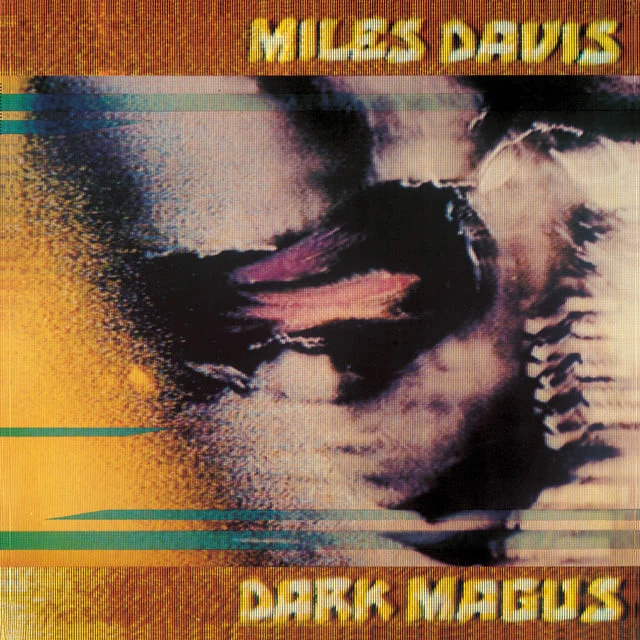
Miles Davis: Dark Magus 12"
Miles Davis: Dark Magus 12"
In January 1973, David Liebman, the saxophonist who played on the first sessions of On The Corner let himself be persuaded to play with the group. It really wasn’t his kind of music, but he thought that “it was where things were happening,” and as was his habit, he joined the fray. And it was prodigious, even if Miles had reduced his band in an attempt to radicalize the Afro-funk directions of On The Corner. No more keyboards, except for a few touches by Miles himself and no more Indian instruments. What remained was Al Foster’s powerful drumming, Michael Henderson’s deep grooves, James “Mtume” Forman’s Afro percussion and, at first, two and then three guitars. Pete Cosey—a habitué of the blues and the Chicago Black avant-garde—revisited Jimi Hendrix’s legacy, in his own iconoclastic way, using a guitar tuned in Hendrix’s particular fashion, and all kinds of accessories. Reggie Lucas took charge of the rhythm, and throughout 1974, Dominique Gaumont contributed a solo guitar in the more classical Hendrix style. Invited without warning to join them on stage at the time of the concert, Azar Lawrence took several steps into the spectacular jungle of sound titled “Tatu.”
Product Information
Product Information
Shipping & Returns
Shipping & Returns
Description
In January 1973, David Liebman, the saxophonist who played on the first sessions of On The Corner let himself be persuaded to play with the group. It really wasn’t his kind of music, but he thought that “it was where things were happening,” and as was his habit, he joined the fray. And it was prodigious, even if Miles had reduced his band in an attempt to radicalize the Afro-funk directions of On The Corner. No more keyboards, except for a few touches by Miles himself and no more Indian instruments. What remained was Al Foster’s powerful drumming, Michael Henderson’s deep grooves, James “Mtume” Forman’s Afro percussion and, at first, two and then three guitars. Pete Cosey—a habitué of the blues and the Chicago Black avant-garde—revisited Jimi Hendrix’s legacy, in his own iconoclastic way, using a guitar tuned in Hendrix’s particular fashion, and all kinds of accessories. Reggie Lucas took charge of the rhythm, and throughout 1974, Dominique Gaumont contributed a solo guitar in the more classical Hendrix style. Invited without warning to join them on stage at the time of the concert, Azar Lawrence took several steps into the spectacular jungle of sound titled “Tatu.”