Die Öwan: Öwannibalism 12"
A cult teenage Japanese punk group which existed from 1979-1983, and during that time managed to release the rarest punk record in Japan, operate their own cassette label, organize house shows, help launch the career of popular Japanese punk band Shonen Knife, and fascinate and inspire with their music, which is truly like any other. Over 40 years later, Die Öwan has the incredible ability to act as one of the most pure time machines capable of transporting the listener into a place where you can get a sense of what it must have been like to have been listening to and inspired by the evolution of underground music in the late 70s in real time. The concurrent explosion of punk, post punk, new wave, industrial, experimental, and avant garde music in the UK, Krautrock in Germany, Dub and Roots Reggae in Jamaica and the UK, was unlike any other. To Die Öwan, enjoying Crass, The Damned, Adverts, Wire, Metal Urbain, Cabaret Voltaire, Throbbing Gristle, Neu!, Brian Eno, and Burning Spear was not only not unusual, it probably seemed obvious, as they were all pushing music forward. Armed with this mentality and limitless gallons of inspiration, in an almost Desperate Bicycles-esque non-commercial mindset of making and releasing music with any amount of resources one had available, set out to make a limitless amount of songs with that inspiration. The music, which is sonically punk at its core, is a web of entangled, urgent, fast bursts of teen angst made with a guitar, bass, early Roland drum machines, and synth, and tape manipulation. Öwannibalism compiles the best of their early releases “Die Station Für Die Öwan”, "Die Feeding Of Die Öwan", “Öwan 2”, and “Öwan 81”, as well as compilation tracks, and completely unreleased and unheard early tracks. The audio has been remastered from the band’s tapes specifically for vinyl, and the LP comes with a 6 page booklet featuring an interview with the band covering their history, their cassette label XA Record, early DIY music and influences in the Kansai region of Japan, with discussion of Kansai bands and labels like Aunt Sally, Hijokaidan, Unbalance Records, Vanity Records, etc, and early photos and flyers.
Our take: Much like the Deef reissues General Speech released at the same time, these two LPs compile little-heard material from an obscure but vital-sounding early Japanese punk band. I encourage you to read General Speech’s blurb for its excellent contextualization, which is full of wow moments and connections. As for what I hear in the music, as Tom from General Speech writes, it’s “sonically punk at its core” in that it’s upbeat, hooky, and raw. There’s also a healthy experimental streak, with primitive drum machines pushed to their limits and the occasional dada-ist gesture like the ringing phone that interrupts the music periodically. There’s also an interesting attitude toward appropriation, with a handful of covers (or are they?) that loosely interpret classic tunes from the UK ’77 songbook. Öwannibalism reminds me of contemporary egg punk too… it’s homemade quality; an appreciation of Ralph Records-style absurdity; the jittery drum machine rhythms; big melodies delivered through a haze of distortion. My wife left the room when I was playing this the other night, telling me it was “obnoxious,” but this presses so many of my nerd buttons I can’t help but love it.
Product Information
Product Information
Shipping & Returns
Shipping & Returns
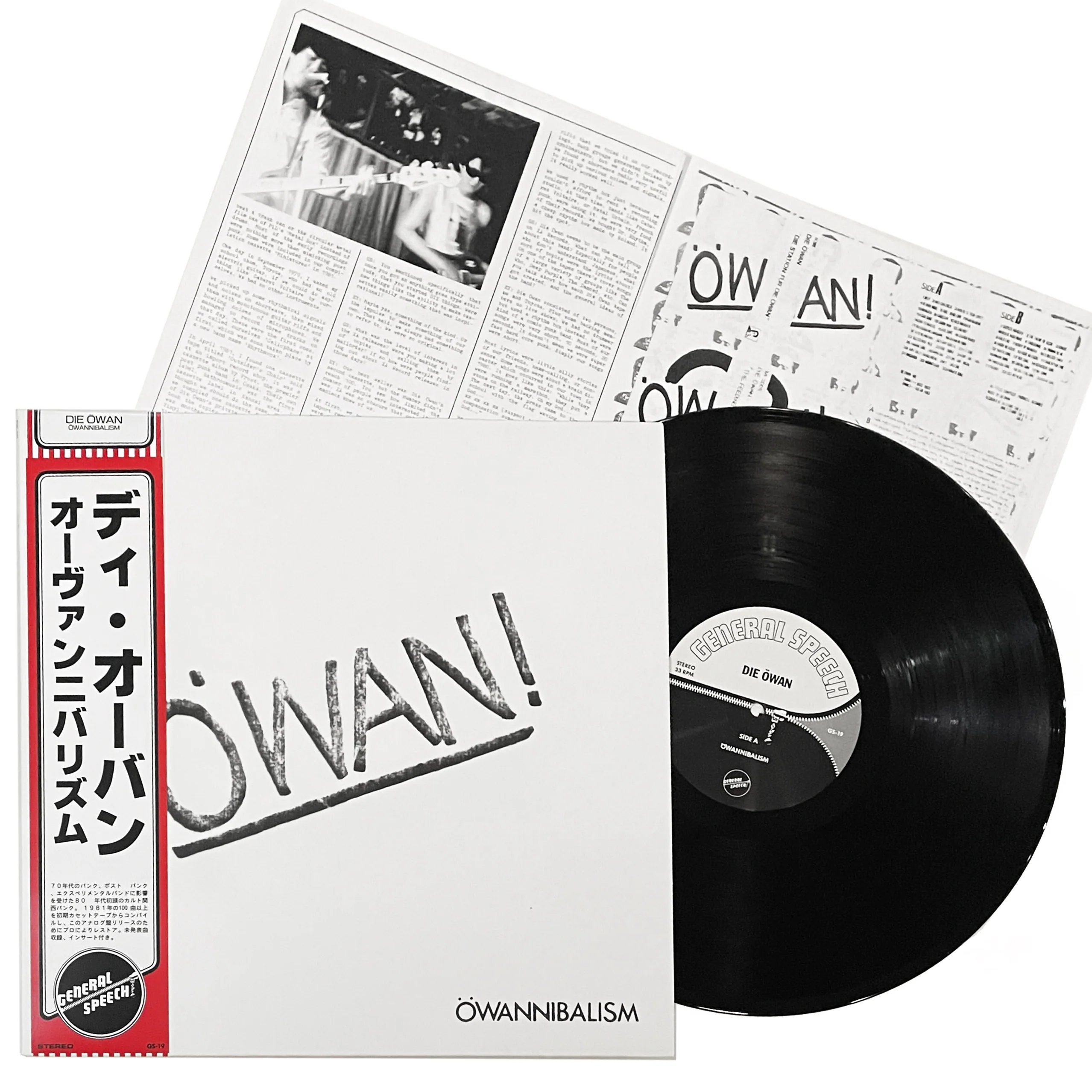
Die Öwan: Öwannibalism 12"
Die Öwan: Öwannibalism 12"
A cult teenage Japanese punk group which existed from 1979-1983, and during that time managed to release the rarest punk record in Japan, operate their own cassette label, organize house shows, help launch the career of popular Japanese punk band Shonen Knife, and fascinate and inspire with their music, which is truly like any other. Over 40 years later, Die Öwan has the incredible ability to act as one of the most pure time machines capable of transporting the listener into a place where you can get a sense of what it must have been like to have been listening to and inspired by the evolution of underground music in the late 70s in real time. The concurrent explosion of punk, post punk, new wave, industrial, experimental, and avant garde music in the UK, Krautrock in Germany, Dub and Roots Reggae in Jamaica and the UK, was unlike any other. To Die Öwan, enjoying Crass, The Damned, Adverts, Wire, Metal Urbain, Cabaret Voltaire, Throbbing Gristle, Neu!, Brian Eno, and Burning Spear was not only not unusual, it probably seemed obvious, as they were all pushing music forward. Armed with this mentality and limitless gallons of inspiration, in an almost Desperate Bicycles-esque non-commercial mindset of making and releasing music with any amount of resources one had available, set out to make a limitless amount of songs with that inspiration. The music, which is sonically punk at its core, is a web of entangled, urgent, fast bursts of teen angst made with a guitar, bass, early Roland drum machines, and synth, and tape manipulation. Öwannibalism compiles the best of their early releases “Die Station Für Die Öwan”, "Die Feeding Of Die Öwan", “Öwan 2”, and “Öwan 81”, as well as compilation tracks, and completely unreleased and unheard early tracks. The audio has been remastered from the band’s tapes specifically for vinyl, and the LP comes with a 6 page booklet featuring an interview with the band covering their history, their cassette label XA Record, early DIY music and influences in the Kansai region of Japan, with discussion of Kansai bands and labels like Aunt Sally, Hijokaidan, Unbalance Records, Vanity Records, etc, and early photos and flyers.
Our take: Much like the Deef reissues General Speech released at the same time, these two LPs compile little-heard material from an obscure but vital-sounding early Japanese punk band. I encourage you to read General Speech’s blurb for its excellent contextualization, which is full of wow moments and connections. As for what I hear in the music, as Tom from General Speech writes, it’s “sonically punk at its core” in that it’s upbeat, hooky, and raw. There’s also a healthy experimental streak, with primitive drum machines pushed to their limits and the occasional dada-ist gesture like the ringing phone that interrupts the music periodically. There’s also an interesting attitude toward appropriation, with a handful of covers (or are they?) that loosely interpret classic tunes from the UK ’77 songbook. Öwannibalism reminds me of contemporary egg punk too… it’s homemade quality; an appreciation of Ralph Records-style absurdity; the jittery drum machine rhythms; big melodies delivered through a haze of distortion. My wife left the room when I was playing this the other night, telling me it was “obnoxious,” but this presses so many of my nerd buttons I can’t help but love it.
Original: $18.00
-70%$18.00
$5.40Product Information
Product Information
Shipping & Returns
Shipping & Returns
Description
A cult teenage Japanese punk group which existed from 1979-1983, and during that time managed to release the rarest punk record in Japan, operate their own cassette label, organize house shows, help launch the career of popular Japanese punk band Shonen Knife, and fascinate and inspire with their music, which is truly like any other. Over 40 years later, Die Öwan has the incredible ability to act as one of the most pure time machines capable of transporting the listener into a place where you can get a sense of what it must have been like to have been listening to and inspired by the evolution of underground music in the late 70s in real time. The concurrent explosion of punk, post punk, new wave, industrial, experimental, and avant garde music in the UK, Krautrock in Germany, Dub and Roots Reggae in Jamaica and the UK, was unlike any other. To Die Öwan, enjoying Crass, The Damned, Adverts, Wire, Metal Urbain, Cabaret Voltaire, Throbbing Gristle, Neu!, Brian Eno, and Burning Spear was not only not unusual, it probably seemed obvious, as they were all pushing music forward. Armed with this mentality and limitless gallons of inspiration, in an almost Desperate Bicycles-esque non-commercial mindset of making and releasing music with any amount of resources one had available, set out to make a limitless amount of songs with that inspiration. The music, which is sonically punk at its core, is a web of entangled, urgent, fast bursts of teen angst made with a guitar, bass, early Roland drum machines, and synth, and tape manipulation. Öwannibalism compiles the best of their early releases “Die Station Für Die Öwan”, "Die Feeding Of Die Öwan", “Öwan 2”, and “Öwan 81”, as well as compilation tracks, and completely unreleased and unheard early tracks. The audio has been remastered from the band’s tapes specifically for vinyl, and the LP comes with a 6 page booklet featuring an interview with the band covering their history, their cassette label XA Record, early DIY music and influences in the Kansai region of Japan, with discussion of Kansai bands and labels like Aunt Sally, Hijokaidan, Unbalance Records, Vanity Records, etc, and early photos and flyers.
Our take: Much like the Deef reissues General Speech released at the same time, these two LPs compile little-heard material from an obscure but vital-sounding early Japanese punk band. I encourage you to read General Speech’s blurb for its excellent contextualization, which is full of wow moments and connections. As for what I hear in the music, as Tom from General Speech writes, it’s “sonically punk at its core” in that it’s upbeat, hooky, and raw. There’s also a healthy experimental streak, with primitive drum machines pushed to their limits and the occasional dada-ist gesture like the ringing phone that interrupts the music periodically. There’s also an interesting attitude toward appropriation, with a handful of covers (or are they?) that loosely interpret classic tunes from the UK ’77 songbook. Öwannibalism reminds me of contemporary egg punk too… it’s homemade quality; an appreciation of Ralph Records-style absurdity; the jittery drum machine rhythms; big melodies delivered through a haze of distortion. My wife left the room when I was playing this the other night, telling me it was “obnoxious,” but this presses so many of my nerd buttons I can’t help but love it.