Cometbus #59: Post-Mortem zine
What are the successes and failures of the punk counterculture? Aaron lays them all out and everything between in the form of stories of his own experiences.
Our take: Since Cometbus is a long-running punk institution and I’ve never written about it before, it’s probably appropriate to mention my personal history with the zine. In a word, I have none. While, at some point, I purchased Despite Everything, which compiles material from their first twenty years, this issue, #59, is the only one I’ve ever read cover to cover. While those early issues look cool, the tiny, hand-written lettering never agreed with my eyes. I suppose I also associate Cometbus with corners of the punk scene that I’ve never felt at home in; I’ve never squatted, never hopped a train, and Crimpshrine’s music never grabbed me. However, I couldn’t tear myself away from Post-Mortem, devouring its 130-ish pages in less than 24 hours. This issue's title is Post-Mortem because Cometbus is attempting what he calls a post-mortem of the underground. What that means is that he looks at a bunch of different punk institutions—a mix of record labels, squats, magazines and publishers, leftist / anarchist bookstores, DIY venues, and even one vegan donut shop—interviewing their founders and the people who keep them running and reflecting on how those institutions got to where they are today. Calling this issue a post-mortem seems to imply that these institutions (or perhaps even the underground as a whole) have died, but most of them are still alive and well. Some of them have gotten bigger and some haven’t, but all of them have gone through difficult periods. While I wouldn’t be so bold as to rank Sorry State alongside Cometbus’s subjects, I feel a kinship with many of them, so the subject hits close to home. And while it doesn’t have the intellectual rigor of a scientific study (as evidenced by my fuzziness on exactly what this issue’s project is), Cometbus is a thoughtful person and a capable writer, making this a joy to read. So, while I can’t predict how this issue might play with the Cometbus superfans, you don’t have to be one to enjoy it.
Product Information
Product Information
Shipping & Returns
Shipping & Returns
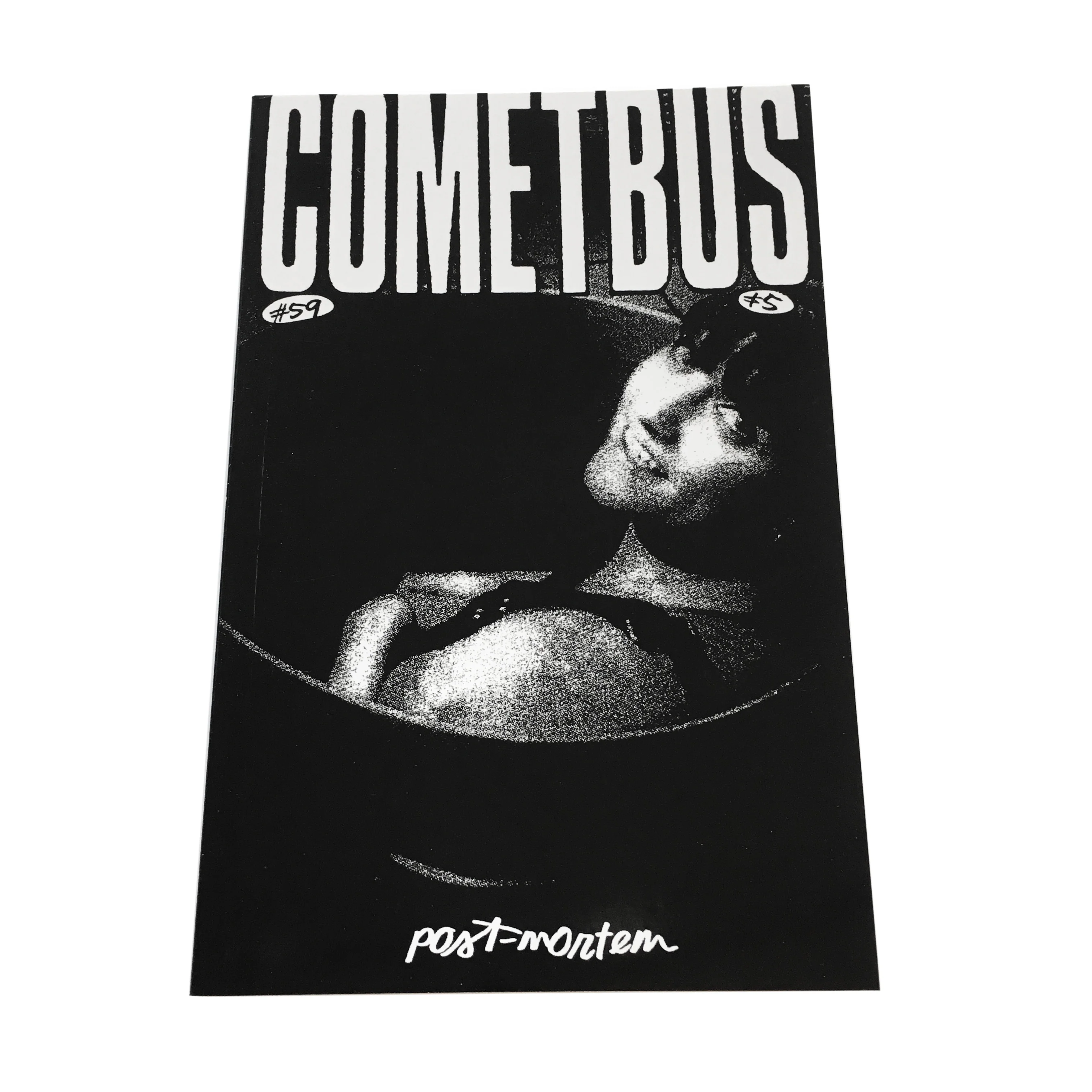
Cometbus #59: Post-Mortem zine
Cometbus #59: Post-Mortem zine
What are the successes and failures of the punk counterculture? Aaron lays them all out and everything between in the form of stories of his own experiences.
Our take: Since Cometbus is a long-running punk institution and I’ve never written about it before, it’s probably appropriate to mention my personal history with the zine. In a word, I have none. While, at some point, I purchased Despite Everything, which compiles material from their first twenty years, this issue, #59, is the only one I’ve ever read cover to cover. While those early issues look cool, the tiny, hand-written lettering never agreed with my eyes. I suppose I also associate Cometbus with corners of the punk scene that I’ve never felt at home in; I’ve never squatted, never hopped a train, and Crimpshrine’s music never grabbed me. However, I couldn’t tear myself away from Post-Mortem, devouring its 130-ish pages in less than 24 hours. This issue's title is Post-Mortem because Cometbus is attempting what he calls a post-mortem of the underground. What that means is that he looks at a bunch of different punk institutions—a mix of record labels, squats, magazines and publishers, leftist / anarchist bookstores, DIY venues, and even one vegan donut shop—interviewing their founders and the people who keep them running and reflecting on how those institutions got to where they are today. Calling this issue a post-mortem seems to imply that these institutions (or perhaps even the underground as a whole) have died, but most of them are still alive and well. Some of them have gotten bigger and some haven’t, but all of them have gone through difficult periods. While I wouldn’t be so bold as to rank Sorry State alongside Cometbus’s subjects, I feel a kinship with many of them, so the subject hits close to home. And while it doesn’t have the intellectual rigor of a scientific study (as evidenced by my fuzziness on exactly what this issue’s project is), Cometbus is a thoughtful person and a capable writer, making this a joy to read. So, while I can’t predict how this issue might play with the Cometbus superfans, you don’t have to be one to enjoy it.
Product Information
Product Information
Shipping & Returns
Shipping & Returns
Description
What are the successes and failures of the punk counterculture? Aaron lays them all out and everything between in the form of stories of his own experiences.
Our take: Since Cometbus is a long-running punk institution and I’ve never written about it before, it’s probably appropriate to mention my personal history with the zine. In a word, I have none. While, at some point, I purchased Despite Everything, which compiles material from their first twenty years, this issue, #59, is the only one I’ve ever read cover to cover. While those early issues look cool, the tiny, hand-written lettering never agreed with my eyes. I suppose I also associate Cometbus with corners of the punk scene that I’ve never felt at home in; I’ve never squatted, never hopped a train, and Crimpshrine’s music never grabbed me. However, I couldn’t tear myself away from Post-Mortem, devouring its 130-ish pages in less than 24 hours. This issue's title is Post-Mortem because Cometbus is attempting what he calls a post-mortem of the underground. What that means is that he looks at a bunch of different punk institutions—a mix of record labels, squats, magazines and publishers, leftist / anarchist bookstores, DIY venues, and even one vegan donut shop—interviewing their founders and the people who keep them running and reflecting on how those institutions got to where they are today. Calling this issue a post-mortem seems to imply that these institutions (or perhaps even the underground as a whole) have died, but most of them are still alive and well. Some of them have gotten bigger and some haven’t, but all of them have gone through difficult periods. While I wouldn’t be so bold as to rank Sorry State alongside Cometbus’s subjects, I feel a kinship with many of them, so the subject hits close to home. And while it doesn’t have the intellectual rigor of a scientific study (as evidenced by my fuzziness on exactly what this issue’s project is), Cometbus is a thoughtful person and a capable writer, making this a joy to read. So, while I can’t predict how this issue might play with the Cometbus superfans, you don’t have to be one to enjoy it.