🎉 Up to 70% Off Selected ItemsShop Sale
Al Green: Greatest Hits 12"
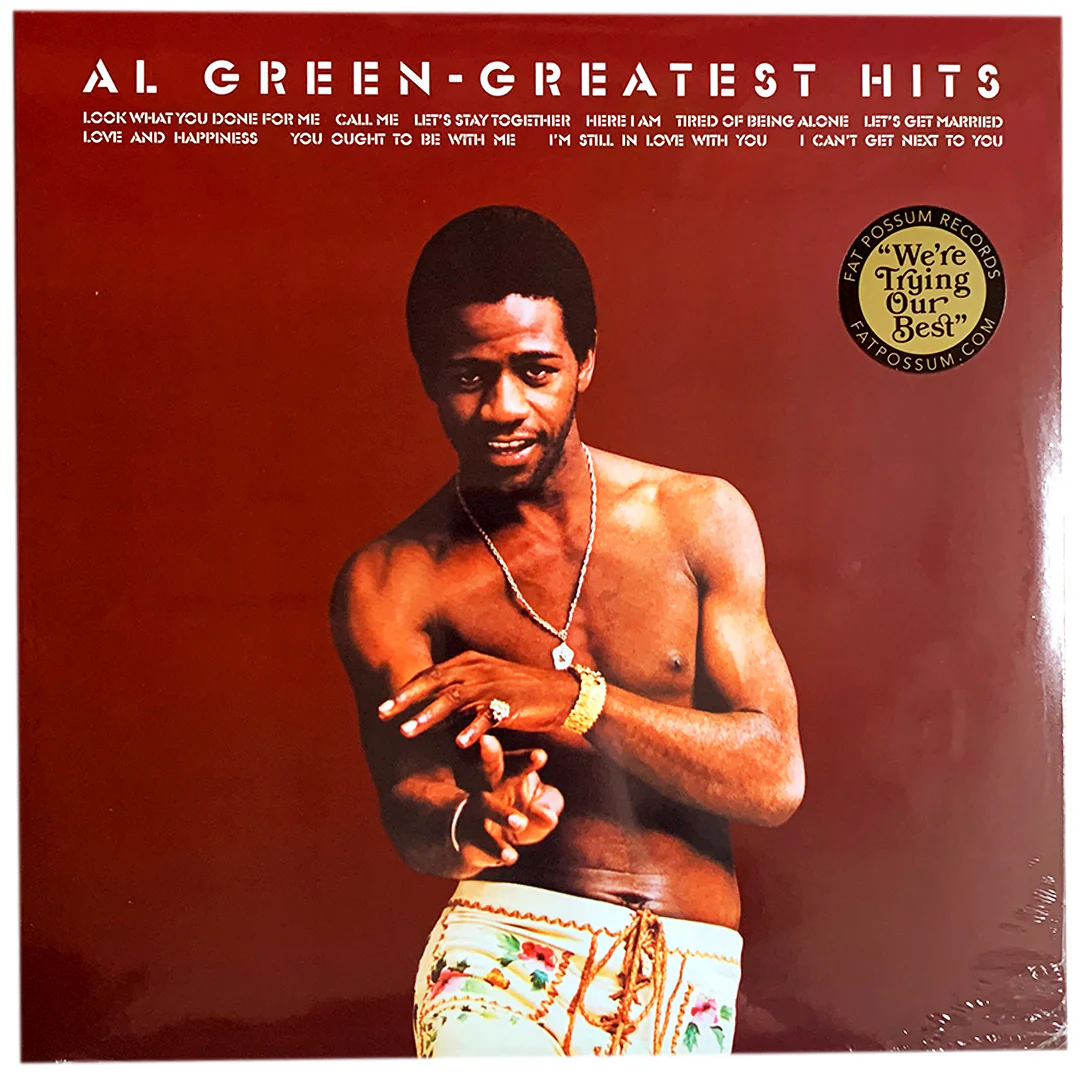
Al Green’s Greatest Hits is a 1975 greatest hits release by soul singer Al Green.
For years, Willie Mitchell told anyone who would listen that the one thing Hi Records needed was a young, charismatic male singer with the potential for stardom. In 1969, fate would intervene in the form of a destitute 22-year-old named Albert Greene.
Green - as he would later change the spelling - relocated to Michigan as a child and began singing gospel with his brothers and launched his career with an album for the tiny Hot Line Label in 1967, called Back Up Train. His first single had been a small breakout, but Green had fallen on hard times since then. Stranded in Texas, he asked if he could sit in and earn a few dollars performing with Mitchell that night. "He started singing and I heard that voice and I said, "'Ah-ha! Look what I found here."
It would take a little more than the 18 months for Green to evolve into stardom. The first two albums they recorded were minor masterpieces in their own way, offering inventive R&B interpretations of songs by the Beatles and Doors, among others. The latter LP produced a top 10 hit in the Green-penned "Tired of Being Alone" and a gritty reworking of the Temptations' "Can't Get Next To You."
Released at the end of 1971, "Let's Stay Together" shot up the charts, becoming a No. 1 hit and the biggest pop song of the following year. The accompanying album would also land atop the R&B charts. The next five years would yield arguably the greatest run in the annals of R&B. With Mitchell producing and helping co-write many of Green's hits ("Call Me [Come Back Home]", and "I'm Still In Love With You"), and guitarist Teenie Hodges collaborating on several others ("Love and Happiness," "Here I Am (Come and Take Me]"), Hi would not only come to dominate, but also redefine, soul music in the early '70s.
For years, Willie Mitchell told anyone who would listen that the one thing Hi Records needed was a young, charismatic male singer with the potential for stardom. In 1969, fate would intervene in the form of a destitute 22-year-old named Albert Greene.
Green - as he would later change the spelling - relocated to Michigan as a child and began singing gospel with his brothers and launched his career with an album for the tiny Hot Line Label in 1967, called Back Up Train. His first single had been a small breakout, but Green had fallen on hard times since then. Stranded in Texas, he asked if he could sit in and earn a few dollars performing with Mitchell that night. "He started singing and I heard that voice and I said, "'Ah-ha! Look what I found here."
It would take a little more than the 18 months for Green to evolve into stardom. The first two albums they recorded were minor masterpieces in their own way, offering inventive R&B interpretations of songs by the Beatles and Doors, among others. The latter LP produced a top 10 hit in the Green-penned "Tired of Being Alone" and a gritty reworking of the Temptations' "Can't Get Next To You."
Released at the end of 1971, "Let's Stay Together" shot up the charts, becoming a No. 1 hit and the biggest pop song of the following year. The accompanying album would also land atop the R&B charts. The next five years would yield arguably the greatest run in the annals of R&B. With Mitchell producing and helping co-write many of Green's hits ("Call Me [Come Back Home]", and "I'm Still In Love With You"), and guitarist Teenie Hodges collaborating on several others ("Love and Happiness," "Here I Am (Come and Take Me]"), Hi would not only come to dominate, but also redefine, soul music in the early '70s.
Product Information
Product Information
Shipping & Returns
Shipping & Returns
Al Green: Greatest Hits 12"
Al Green: Greatest Hits 12"
Al Green’s Greatest Hits is a 1975 greatest hits release by soul singer Al Green.
For years, Willie Mitchell told anyone who would listen that the one thing Hi Records needed was a young, charismatic male singer with the potential for stardom. In 1969, fate would intervene in the form of a destitute 22-year-old named Albert Greene.
Green - as he would later change the spelling - relocated to Michigan as a child and began singing gospel with his brothers and launched his career with an album for the tiny Hot Line Label in 1967, called Back Up Train. His first single had been a small breakout, but Green had fallen on hard times since then. Stranded in Texas, he asked if he could sit in and earn a few dollars performing with Mitchell that night. "He started singing and I heard that voice and I said, "'Ah-ha! Look what I found here."
It would take a little more than the 18 months for Green to evolve into stardom. The first two albums they recorded were minor masterpieces in their own way, offering inventive R&B interpretations of songs by the Beatles and Doors, among others. The latter LP produced a top 10 hit in the Green-penned "Tired of Being Alone" and a gritty reworking of the Temptations' "Can't Get Next To You."
Released at the end of 1971, "Let's Stay Together" shot up the charts, becoming a No. 1 hit and the biggest pop song of the following year. The accompanying album would also land atop the R&B charts. The next five years would yield arguably the greatest run in the annals of R&B. With Mitchell producing and helping co-write many of Green's hits ("Call Me [Come Back Home]", and "I'm Still In Love With You"), and guitarist Teenie Hodges collaborating on several others ("Love and Happiness," "Here I Am (Come and Take Me]"), Hi would not only come to dominate, but also redefine, soul music in the early '70s.
For years, Willie Mitchell told anyone who would listen that the one thing Hi Records needed was a young, charismatic male singer with the potential for stardom. In 1969, fate would intervene in the form of a destitute 22-year-old named Albert Greene.
Green - as he would later change the spelling - relocated to Michigan as a child and began singing gospel with his brothers and launched his career with an album for the tiny Hot Line Label in 1967, called Back Up Train. His first single had been a small breakout, but Green had fallen on hard times since then. Stranded in Texas, he asked if he could sit in and earn a few dollars performing with Mitchell that night. "He started singing and I heard that voice and I said, "'Ah-ha! Look what I found here."
It would take a little more than the 18 months for Green to evolve into stardom. The first two albums they recorded were minor masterpieces in their own way, offering inventive R&B interpretations of songs by the Beatles and Doors, among others. The latter LP produced a top 10 hit in the Green-penned "Tired of Being Alone" and a gritty reworking of the Temptations' "Can't Get Next To You."
Released at the end of 1971, "Let's Stay Together" shot up the charts, becoming a No. 1 hit and the biggest pop song of the following year. The accompanying album would also land atop the R&B charts. The next five years would yield arguably the greatest run in the annals of R&B. With Mitchell producing and helping co-write many of Green's hits ("Call Me [Come Back Home]", and "I'm Still In Love With You"), and guitarist Teenie Hodges collaborating on several others ("Love and Happiness," "Here I Am (Come and Take Me]"), Hi would not only come to dominate, but also redefine, soul music in the early '70s.
$427.80
Original: $1,426.00
-70%Al Green: Greatest Hits 12"—
$1,426.00
$427.80Product Information
Product Information
Shipping & Returns
Shipping & Returns
Description
Al Green’s Greatest Hits is a 1975 greatest hits release by soul singer Al Green.
For years, Willie Mitchell told anyone who would listen that the one thing Hi Records needed was a young, charismatic male singer with the potential for stardom. In 1969, fate would intervene in the form of a destitute 22-year-old named Albert Greene.
Green - as he would later change the spelling - relocated to Michigan as a child and began singing gospel with his brothers and launched his career with an album for the tiny Hot Line Label in 1967, called Back Up Train. His first single had been a small breakout, but Green had fallen on hard times since then. Stranded in Texas, he asked if he could sit in and earn a few dollars performing with Mitchell that night. "He started singing and I heard that voice and I said, "'Ah-ha! Look what I found here."
It would take a little more than the 18 months for Green to evolve into stardom. The first two albums they recorded were minor masterpieces in their own way, offering inventive R&B interpretations of songs by the Beatles and Doors, among others. The latter LP produced a top 10 hit in the Green-penned "Tired of Being Alone" and a gritty reworking of the Temptations' "Can't Get Next To You."
Released at the end of 1971, "Let's Stay Together" shot up the charts, becoming a No. 1 hit and the biggest pop song of the following year. The accompanying album would also land atop the R&B charts. The next five years would yield arguably the greatest run in the annals of R&B. With Mitchell producing and helping co-write many of Green's hits ("Call Me [Come Back Home]", and "I'm Still In Love With You"), and guitarist Teenie Hodges collaborating on several others ("Love and Happiness," "Here I Am (Come and Take Me]"), Hi would not only come to dominate, but also redefine, soul music in the early '70s.
For years, Willie Mitchell told anyone who would listen that the one thing Hi Records needed was a young, charismatic male singer with the potential for stardom. In 1969, fate would intervene in the form of a destitute 22-year-old named Albert Greene.
Green - as he would later change the spelling - relocated to Michigan as a child and began singing gospel with his brothers and launched his career with an album for the tiny Hot Line Label in 1967, called Back Up Train. His first single had been a small breakout, but Green had fallen on hard times since then. Stranded in Texas, he asked if he could sit in and earn a few dollars performing with Mitchell that night. "He started singing and I heard that voice and I said, "'Ah-ha! Look what I found here."
It would take a little more than the 18 months for Green to evolve into stardom. The first two albums they recorded were minor masterpieces in their own way, offering inventive R&B interpretations of songs by the Beatles and Doors, among others. The latter LP produced a top 10 hit in the Green-penned "Tired of Being Alone" and a gritty reworking of the Temptations' "Can't Get Next To You."
Released at the end of 1971, "Let's Stay Together" shot up the charts, becoming a No. 1 hit and the biggest pop song of the following year. The accompanying album would also land atop the R&B charts. The next five years would yield arguably the greatest run in the annals of R&B. With Mitchell producing and helping co-write many of Green's hits ("Call Me [Come Back Home]", and "I'm Still In Love With You"), and guitarist Teenie Hodges collaborating on several others ("Love and Happiness," "Here I Am (Come and Take Me]"), Hi would not only come to dominate, but also redefine, soul music in the early '70s.