Ornette Coleman: The Shape of Jazz to Come 12"
THE SHAPE OF JAZZ TO COME, SO NAMED FOR ITS UNIQUE INSTRUMENTATION, MUSICIANSHIP AND arrangement at the suggestion of Atlantic Records producer Nesuhi Ertegun, is widely considered the impetus for the free jazz movement (or the ‘new thing’ as it was called at the time). While Coltrane is unquestionably the master of the ‘free jazz’ sound, who knows what Giant Steps may have sounded like if Trane never heard this. For his first record with Atlantic, Ornette Coleman linked with trumpeter Don Cherry, bassist Charlie Haden and drummer Billy Higgins, whom he’d continue to work with throughout the sixties and seventies. There’s the absence of a chordal instrument (piano, guitar) in the quartet, which wasn’t commonplace at the time but not totally unheard of. This encouraged the musicians to play free from any chord structure, instead focusing on melodic improvisation and variations of the tune’s theme. There’s a ton of empty space on this record; Coleman and Cherry play their horns reservedly, carefully constructing short lines over Haden’s frollicking basslines and Higgins’ rolling drum licks, resulting in a minimal, atmospheric take on jazz. The album opens with “Lonely Woman,” now considered to be one of Coleman’s finest compositions. Charlie Haden would revisit this tune again and again throughout his career, with Pat Metheny, Denny Zeitlin, Don Cherry and more, and the tune became a standard in its own right. The crew cover a lot of ground in the album’s original six tracks, from the frenetic “Eventually” to the clinical “Focus On Sanity” and the tranquil “Peace,” and this heavyweight Euro import pressing includes an additional bonus track taken from the original recording sessions, “Just For You.”
Product Information
Product Information
Shipping & Returns
Shipping & Returns
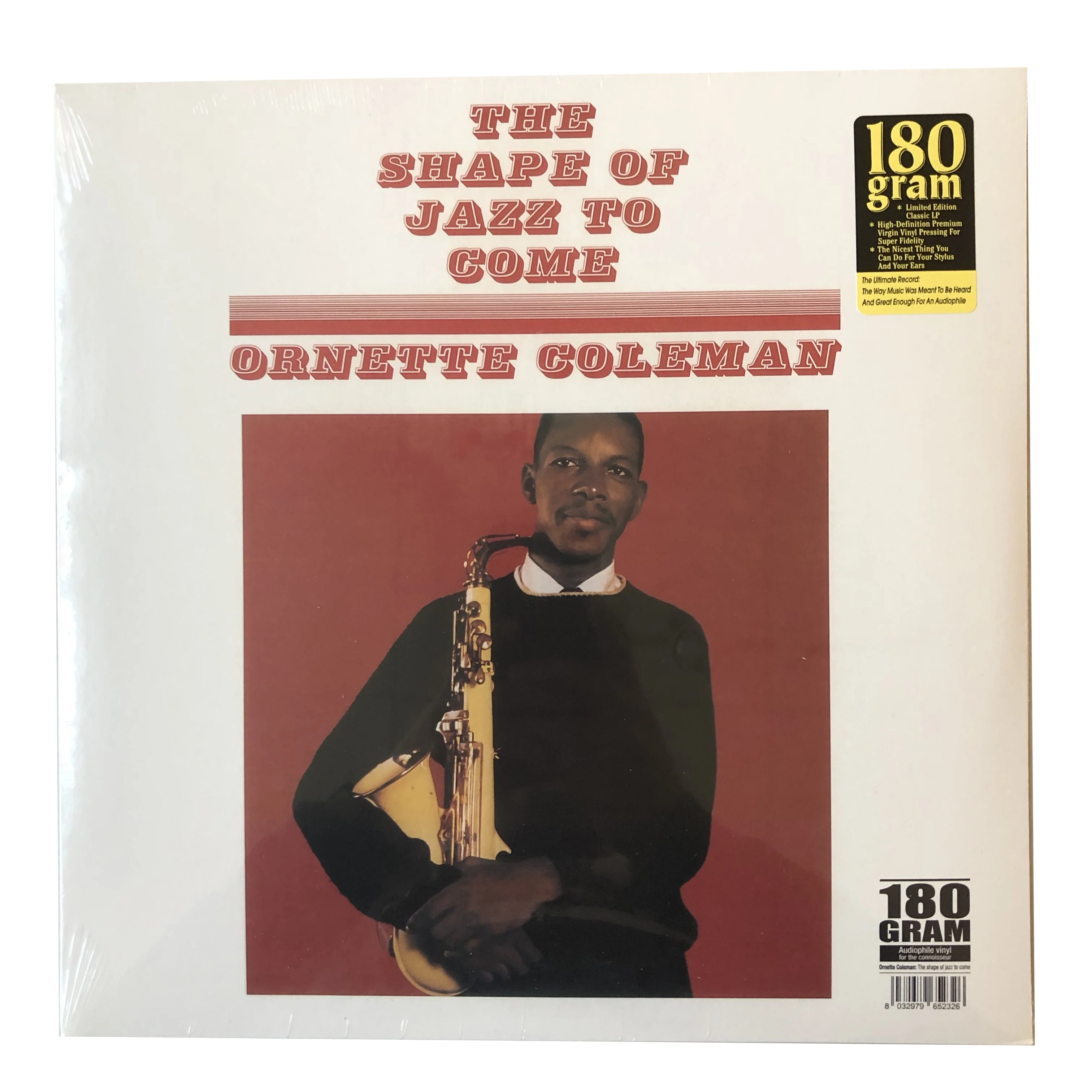
Ornette Coleman: The Shape of Jazz to Come 12"
Ornette Coleman: The Shape of Jazz to Come 12"
THE SHAPE OF JAZZ TO COME, SO NAMED FOR ITS UNIQUE INSTRUMENTATION, MUSICIANSHIP AND arrangement at the suggestion of Atlantic Records producer Nesuhi Ertegun, is widely considered the impetus for the free jazz movement (or the ‘new thing’ as it was called at the time). While Coltrane is unquestionably the master of the ‘free jazz’ sound, who knows what Giant Steps may have sounded like if Trane never heard this. For his first record with Atlantic, Ornette Coleman linked with trumpeter Don Cherry, bassist Charlie Haden and drummer Billy Higgins, whom he’d continue to work with throughout the sixties and seventies. There’s the absence of a chordal instrument (piano, guitar) in the quartet, which wasn’t commonplace at the time but not totally unheard of. This encouraged the musicians to play free from any chord structure, instead focusing on melodic improvisation and variations of the tune’s theme. There’s a ton of empty space on this record; Coleman and Cherry play their horns reservedly, carefully constructing short lines over Haden’s frollicking basslines and Higgins’ rolling drum licks, resulting in a minimal, atmospheric take on jazz. The album opens with “Lonely Woman,” now considered to be one of Coleman’s finest compositions. Charlie Haden would revisit this tune again and again throughout his career, with Pat Metheny, Denny Zeitlin, Don Cherry and more, and the tune became a standard in its own right. The crew cover a lot of ground in the album’s original six tracks, from the frenetic “Eventually” to the clinical “Focus On Sanity” and the tranquil “Peace,” and this heavyweight Euro import pressing includes an additional bonus track taken from the original recording sessions, “Just For You.”
Product Information
Product Information
Shipping & Returns
Shipping & Returns
Description
THE SHAPE OF JAZZ TO COME, SO NAMED FOR ITS UNIQUE INSTRUMENTATION, MUSICIANSHIP AND arrangement at the suggestion of Atlantic Records producer Nesuhi Ertegun, is widely considered the impetus for the free jazz movement (or the ‘new thing’ as it was called at the time). While Coltrane is unquestionably the master of the ‘free jazz’ sound, who knows what Giant Steps may have sounded like if Trane never heard this. For his first record with Atlantic, Ornette Coleman linked with trumpeter Don Cherry, bassist Charlie Haden and drummer Billy Higgins, whom he’d continue to work with throughout the sixties and seventies. There’s the absence of a chordal instrument (piano, guitar) in the quartet, which wasn’t commonplace at the time but not totally unheard of. This encouraged the musicians to play free from any chord structure, instead focusing on melodic improvisation and variations of the tune’s theme. There’s a ton of empty space on this record; Coleman and Cherry play their horns reservedly, carefully constructing short lines over Haden’s frollicking basslines and Higgins’ rolling drum licks, resulting in a minimal, atmospheric take on jazz. The album opens with “Lonely Woman,” now considered to be one of Coleman’s finest compositions. Charlie Haden would revisit this tune again and again throughout his career, with Pat Metheny, Denny Zeitlin, Don Cherry and more, and the tune became a standard in its own right. The crew cover a lot of ground in the album’s original six tracks, from the frenetic “Eventually” to the clinical “Focus On Sanity” and the tranquil “Peace,” and this heavyweight Euro import pressing includes an additional bonus track taken from the original recording sessions, “Just For You.”